Veteran Expat Life Overseas: Complete Guide for 2026
Table of Contents
Veteran Expat Life in Colombia
Veteran expat life overseas in Colombia draws US veterans toward the Eastern Antioquia mountains, where Cocorná offers a lower cost of living and a tranquil foothills setting near Medellín and Guatapé. This practical field guide lays out a clear roadmap for veterans exploring a move abroad. It covers continuing VA disability payments internationally, visa and residency strategies, healthcare options, and how to connect with a trusted veteran community. For those who want a turnkey living arrangement, an all-inclusive veteran residence in Cocorná provides private rooms, three meals a day, and utilities with transparent rates ranging from $2,200 to $3,500 per month. The first stop on this roadmap explains how veterans can keep receiving their VA disability payments while living outside the United States.
1. Access VA Disability Payments Abroad
One of the first questions U.S. veterans ask when considering a move overseas is whether their VA disability payments will follow them. The answer is a clear yes. The VA deposits monthly disability compensation directly into a U.S. bank account, and that income continues regardless of where the veteran chooses to live. Some veterans use international banking or multi-currency accounts to avoid fees, while others simply withdraw funds from local ATMs. A veteran with a 100% permanent and total rating receives between roughly $3,900 and $4,300 each month, tax-free. That stable income goes a long way in countries like Colombia, where the cost of living is substantially lower than in the United States. This math is a big reason so many disabled veterans are exploring expat life in communities like Cocorná and eastern Antioquia. Your benefits don't stop at the border. Neither should you.
2. Use the VA Foreign Medical Program
While the previous section explained receiving VA disability payments abroad, healthcare is a separate matter handled through the VA Foreign Medical Program (FMP). The FMP is a VA program that can pay for or reimburse covered healthcare for enrolled veterans receiving care outside the United States, including in Colombia.
To use FMP, veterans must be enrolled in the VA healthcare system. Non-emergency care typically requires prior authorization from the appropriate VA office before receiving treatment in Colombia, so it’s wise to plan ahead. Emergency care follows different rules, but veterans should still keep all itemized receipts for any claim. Veteran Housing Colombia’s field guide 'Retiring in Colombia as an American Veteran: A Practical Guide' walks through the FMP process in detail, and these practical topics are often discussed within veteran expat communities to help newcomers get started.
FMP is one piece of the healthcare puzzle; many veterans also combine it with Colombia’s local healthcare system, which the next section covers.
3. Navigate Local Healthcare Systems
After understanding the VA Foreign Medical Program, veterans need to learn how Colombia’s local healthcare system works. Healthcare access is a key factor when evaluating the best countries for veterans to retire, and a little local orientation can make Colombia’s system feel far less foreign. The transition from VA-managed care to a foreign system calls for preparation rather than assumption.
Colombia’s private healthcare system runs on a different rhythm than a VA clinic, and veterans should confirm which facilities accept Foreign Medical Program reimbursement before they need care. Asking about payment procedures ahead of time prevents surprise bills.
The guide from Veteran Housing Colombia, based in Cocorná in eastern Antioquia, outlines the enrollment steps and paperwork — from passport copies to service-connection letters — so veterans can avoid delays when they seek local treatment.
Learning to navigate an unfamiliar healthcare system is one piece of the wider puzzle of expat life, and the next section breaks down the other challenges veterans face when they make the move.
4. Overcome Expat Life Challenges
Once healthcare is sorted, the real adjustment begins: settling into a new culture, language, and daily rhythm.
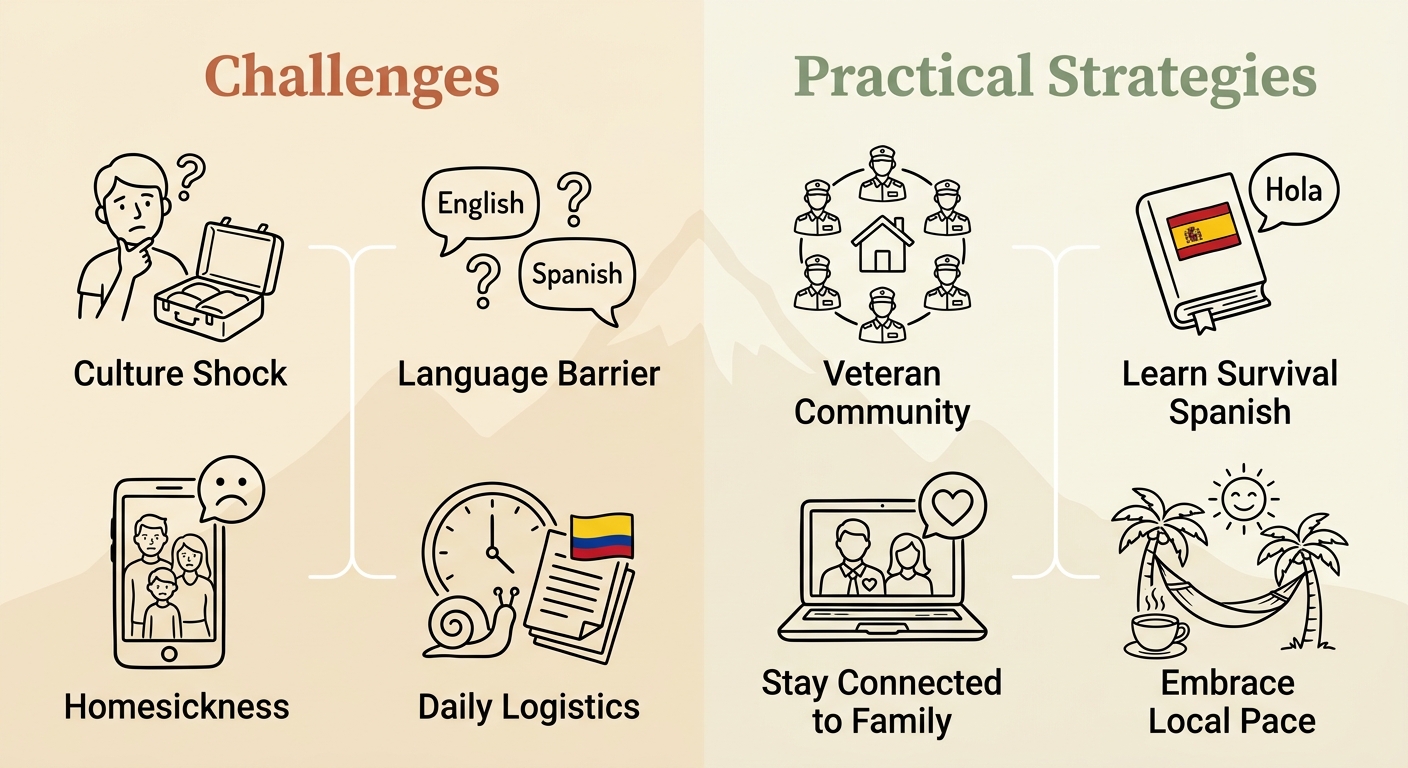 Practical strategies for U.S. veterans overcoming expat life challenges in Colombia.
Culture shock often follows a predictable curve, but a vetted veteran community — with shared meals and retreats — eases adjustment. Learning a few Spanish phrases and using translation apps helps bridge the language gap in Cocorná. The coliving setup — shared kitchens, group outings, and regular retreats — fosters natural bonds that counter isolation. Homesickness is real; scheduled video calls and occasional visits help keep family ties strong. Colombia’s tranquil pace and paperwork demand patience, but the all-inclusive model ($2,200–$3,500/month) removes the stress of unpredictable bills, freeing veterans to embrace daily life in Eastern Antioquia.
These everyday adjustments lead naturally into another practical challenge — international banking, which we explore next.
5. Manage International Banking Easily
Once veterans sort out the everyday challenges of settling in, handling day-to-day banking becomes the next practical layer that makes life in Colombia feel manageable.
They keep their US bank account open for steady VA disability, pension, or Social Security direct deposits. At the same time, a Colombian account handles local spending in pesos, so daily transactions are fast and familiar.
Most veterans move funds by international transfer or ATM withdrawal, always comparing fees and exchange rates before making a move. The goal is a low-cost routine they can rely on each month, not a deep dive into international finance.
Getting banking squared away around the same time as visa and residency paperwork can make the whole transition smoother. Colombian banks generally ask for a visa and passport, so having those documents ready speeds things up.
Once money flows predictably between the US and Colombia, veterans can turn their attention to where they will actually live — the kind of steady, community-oriented housing that feels like home.
6. Find Veterans Housing Abroad
With international banking arranged, the next step in settling overseas is securing a place to live in Colombia. Veterans can explore the range of housing options and decide what fits their lifestyle, budget, and desire for community support.
Veteran Housing Colombia’s field guides cover the main choices: independent rentals, coliving arrangements, and all-inclusive residences. Each guide explains what to look for, whether confirming that utilities, Wi-Fi, and meals are included in the monthly payment or understanding lease terms and trial-stay policies. Veterans can compare the features of each housing type and decide which setup best fits their needs.
For a turnkey community, the all-inclusive veteran residence in Cocorná provides private rooms, three meals daily, utilities, and a vetted veteran community, with current published rates starting around $2,200 USD per month for a private room. Veterans can confirm what’s included and ask about trial stays before committing. Choosing a coliving or all-inclusive residence often becomes the gateway to the veteran community; the next section covers how to connect.
7. Join Veteran Expat Communities
While securing housing is a crucial step, building meaningful connections with other veterans who understand military life is equally important for truly embracing veteran expat life overseas. Shared military experience creates an immediate foundation of trust and mutual understanding that can ease the emotional challenges of relocation.
Veteran expat communities often exchange practical local knowledge, from visa renewal tips and housing leads to recommendations for trustworthy healthcare providers. They can also provide guidance on managing VA benefits from abroad and share firsthand advice on making the most of Colombia’s 180-day tourist allowance. This informal mentorship and camaraderie help newcomers navigate the day-to-day realities of living abroad without feeling isolated.
For US veterans considering Colombia, Veteran Housing Colombia offers a practical field guide that explores these community-focused living arrangements and relocation insights. Colombia, where veterans are building supportive networks, setting the stage for the next topic.
8. Colombia: A Top Country for Veterans
The strong sense of community is one reason Colombia ranks among the top countries for veterans. A combination of affordability, climate, and culture makes the country an increasingly popular choice.
In Colombia, everyday costs stretch a veteran’s benefits significantly further than in most parts of the United States. The year-round temperate climate in regions like eastern Antioquia eliminates harsh winters, and the local culture is known for its warmth and hospitality. A growing network of American veterans and expats already makes their home in Colombia, making the transition smoother for newcomers who value connection and shared experience.
For a step-by-step look at what veterans retiring in Colombia need to know, Veteran Housing Colombia’s practical guide covers visa and residency steps, cost-of-living figures, housing options, and transparent current pricing for the all-inclusive residence — without promising fixed rates or guaranteed availability.
Colombia is where life abroad as a veteran can truly begin — and the next section will walk through the first steps of that journey.
Your Veteran Expat Journey Starts Here
After exploring why Colombia ranks as a top country for veterans, veteran expat life overseas feels more achievable than ever. The established veteran community, veteran-focused housing options, and straightforward visa and benefits guidance make the transition manageable. The site’s complete field guide for veterans retiring in Colombia walks through each practical step, from residency to coordinating VA disability, TRICARE, and Social Security. For those ready to take a tangible step, the all-inclusive veteran residence in Cocorná offers private rooms, meals, and utilities within a veteran community, with room rates openly published at $2,200–$3,500 per month. Explore the field guides or inquire about the residence to begin this next chapter. No overpromises, just a clear starting point for the journey ahead.
Start Your Veteran Expat Journey
You have now explored the comprehensive field guide to veteran expat life overseas in 2026. From navigating VA disability payments and healthcare abroad to joining a strong veteran community, the roadmap is clear. The guide highlighted practical steps for banking, housing, and overcoming the day-to-day challenges of moving to Colombia. Veteran Housing Colombia offers detailed resources and a vetted network to support your transition. Their all-inclusive residence in Cocorná provides a real-world example of the community-focused living discussed throughout the article. Explore the full collection of field guides and take the next step toward your new life. Your veteran expat journey starts with a single click.